martes, 30 de octubre de 2012

EMERGENCY TREATMENT OF POISONING

GENERAL CARE
It is often impossible to establish with certainty the identity of the poison and the size of the dose. Fortunately this is not usually important because only a few poisons have specific antidotes. In most patients, treatment is directed at managing symptoms as they arise.
  • RESPIRATION
Most poisons that impair consciousness also depress respiration. Assisted ventilation may be needed. Oxygen is not a substitute for adequate ventilation, although it should be given in the highest concentration possible in poisoning with carbon monoxide and irritant gases.
Respiratory stimulants so not help and should be avoided.
  • BLOOD PRESSURE
Hypotension is common in severe poisoning with central nervous system depressants. A systolic blood pressure of less than 70mmHg may lead to irreversible brain damage or renal tubular necrosis.
Hypotension should be corrected initially by tilting down the head of the bed and administration of either sodium chloride  intravenous infusion or a colloidal infusion.
Hypertension, often transient, occurs less frequently and it may be associated with sympathomimetic drugs such as amphetamines, phencyclidine and cocaine.
  • HEART
Cardiac conduction defects and arrhythmias can occue in acute poisoning, notably with tricyclic antidepressants , some antipsychotics, and some antihistamines.
  • BODY TEMPERATURE
Hypothermia may develop in patients of any age who have been deeply unconscious for some hours, particularly following overdose with barbiturates or phenothiazines.
Hyperthermia can develop in patients taking CNS stimulants, children and the elderly are also at risk when taking therapeutic doses of drugs with antimuscarinic properties.
Both hypothermia and hyperthermia require urgent hospitalisation.
  • CONVULSIONS
Single short -lived convulsions do not require treatment. If convulsions are protracted or recur frequently, lorazepam (4mg) or diazepam (10mg) should be given by slow intravenous injection into a large vein, diazepam can be administered as a rectal solution or midazolam can be given by the buccal route.


REMOVAL AND ELIMINATION

  • Prevention of absorption
Given by mouth, activated charcoal can bind many poisons in the gastro-intestinal system, thereby reducing their absorption. The sooner it is given the more effective it is, but it may still be effective  up to 1 hour after ingestion of the poison.
  • Active elimination techniques
Repeated doses of activated charcoal by mouth enhance the elimination of some drugs after they have been absorbed, repeated doses are given after overdosage with:

-Carbamazepine
-Dapsone
-Phenobarbital
-Quinine
-Theophylline
The usual dose of activated charcoal in adults and children over 12 years of age is 50g initially then 50g every 4 hours. Vomiting should be treated since it may reduce the efficacy of charcoal treatment.In cases of intolerance, the dose may be reduced and the frequency increased.
Other techniques intended to enhance the elimination of poisons after absorption:

-Hemodialysis for salicylates, phenobarbital, methyl alcohol (methanol), ethylene glycol and lithium.
-Alkalinisation of the urine for salicylates and phenoxyacetate herbicides.
  • Removal from gastro-intestinal tract
Gastric lavage is rarely required, it should be considered only if a life-threatening amount has been ingested within the previous hour and the airway can be protected adequately.

It may occasionally be considered in patients who have ingested drugs that are not absorbed by charcoal, such as iron or lithium.
Whole bowel irrigation has been used in poisoning with certain modified-release or enteric coated formulations, in severe poisoning  with iron or lithium salts and if illicit drugs are carried in the gastro-intestinal tract.


SPECIFIC DRUGS

 More information: http://www.toxbase.org/
Source: BNF (British National Formulary) 2009

jueves, 11 de octubre de 2012

ACCIDENT FORM


Falls can be a serious problem in the hospital or in a nursing home. They may be caused by:
  • Poor lighting, slippery floors, and equipment in rooms and hallways that gets in the way
  • Being weak from illness or surgery and being in new surroundings
Hospital staff often do not see patients fall. But falls require attention right away to lessen the risk of injury.

When the Patient Falls

If you are with a patient when they begin to fall:
  • Use your body to break their fall.
  • Protect your own back by keeping your feet wide apart and your knees bent.
  • Make sure the patient’s head does not hit the floor or any furniture.

AFTER THE FALL

Stay with the patient and call for help.
  • Check the patient’s breathing, pulse, and blood pressure. If the patient is unconscious, not breathing, or does not have a pulse, call a hospital emergency code.
  • Check for injury, such as cuts, scrapes, bruises, and broken bones.
  • If you were not there when the patient fell, ask the patient or someone who saw the fall what happened.
If the patient is confused, shaking, or shows signs of weakness, pain, or dizziness:
  • Stay with the patient. Provide blankets for comfort until medical staff can evaluate them.
  • Do not raise the patient’s head if they may have injured their neck or back. Wait for medical staff to check for a spinal injury.
Once medical staff decides the patient can be moved, you need to choose the best way to move them.
  • If the patient is not hurt or injured and does not appear ill, have another staff member help you. Both of you should help the patient into a wheelchair or their bed. Do not help them on your own.
  • If they cannot support most of their own body weight, you may need to use a backboard or a lift.
Watch the patient closely after their fall. You may need to check their alertness, their blood pressure and pulse, and perhaps their blood sugar.
Document the fall according to your hospital’s policies.

EXAMPLE OF ACCIDENT FORM:

Source: Medline Plus.

lunes, 10 de septiembre de 2012

DEMENTIA


Risk factors:
-strong family history of Alzheimer´s dementia.
-repeated head trauma can increase risk of both Alzheimer´s dementia and dementia associated.

How people present with dementia:
-declining short-term memory.
-loss of ability to perform complicated tasks.
-people with dementia may not recognise these difficulties and refuse help or assisstance.

Depression in dementia:
-Mood changes and depression are common 20% people with dementia may develop depression.
-It can be more common in those living alone, recent bereavement or chronic physical illness.

Challenging behaviour:
The behaviour  is challenging not the person.
-disturbance of sleep/awake cycle.
-wandering, pacing and restlesnness are common, sometimes medication can worsen this.
-agitation and worsen confusion can increase in the evening.


Memory holds the whole of our past life and experience.
It´s loss is greater than the loss of any of our senses.


viernes, 7 de septiembre de 2012

THE DIGESTIVE SYSTEM


Anatomy of the stomach


Small intestine or small bowel (intestino delgado):
-duodenum (duodeno).
-jejunum (yeyuno)
-ileum (íleon), ileocaecal valve (válvula ileocecal).
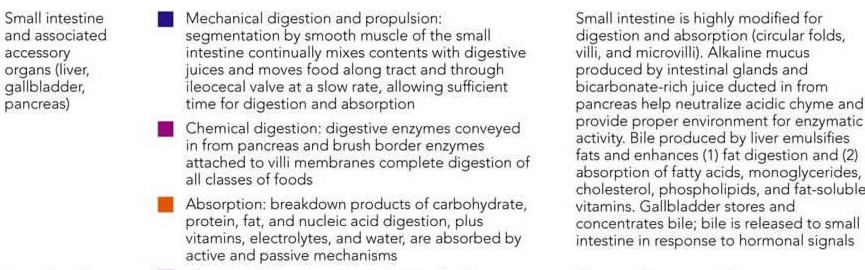
Summary of digestive activities in the small intestine:


Large intestine, also large bowel (intestino grueso):
-ascending colon (colon ascendente), cecum (ciego), appendix (apéndice).
-transverse colon (colon transverso).
-descending colon (colon descendente).
-sigmoid colon (colon sigmoide).
Rectum (recto).
Anus (ano).
Summary of digestive activities in the large intestine:


miércoles, 5 de septiembre de 2012

THE CIRCULATORY SYSTEM, THE HEART AND THE BLOOD


THE HEART


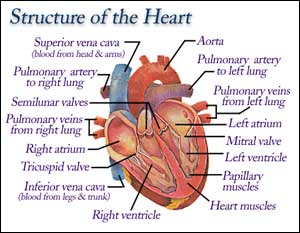
Valves (válvulas): 
-atrioventricular: tricuspid (tricúspide) and mitral
-semilunar: pulmonary (pulmonar) and aortic(aórtica). Valves prevent the backflow of blood (las válvulas previenen el retroceso de la sangre).
Right and left atrium/s (derecha e izquierda aurícula/s): upper receiving chambers (cámaras superiores receptoras).
Right and left ventricle/s (derecho e izquierdo ventrículo/s): responsible for the pumping action (responsables de la acción de bombeo).


THE CARDIAC CYCLE (from 1 heartbeat to another)


VOCABULARY
-MI: myocardial infarction (heart attack). (infarto de miocardio, ataque cardíaco).
-GTN: glyceril trinitrate, called nitrolingual. (nitroglicerina
-Thrombus (trombo).
-Coagulation-clot (coagulación-coágulo)
-Heparin e.g. warfarin (heparina)
-DVT: deep vein trombosis. (trombosis venosa profunda).


BLOOD
Functions:
-Transport (gases, nutrients, waste products, hormones, heat).
-Protection (leukocytes, antibodies, platelet factors...).
-Regulation (pH, water balance...)

Composition:
-Plasma, which is a clear extracellular fluid. Mixture of proteins (albumins, globulins, fibrinogen), amino acids, enzymes, nutrients, waste, hormones, gases and electrolytes.
-Formed elements: blood cells and platelets.


Blood test

Blood cultures son lo que se conocen como hemocultivos, muestras que precisan una técnica aséptica pero también sirve como ejemplo para otras extracciones más comunes.

These are some of the blood samples that a doctor can ask for:
FBC or FBP (full blood count or full blood picture, the most common blood control).
U+E (electrolytes).
LFT (liver function test).
TFT (thyroid function test).
CRP ( general marker for inflammation and infection).
INR (coagulation, especially in people on warfarin).
B12Folate.

Ageing changes in the blood.
1. Rise in fibrinogen.
2. Rise in blood viscosity.
3. Rise in plasma viscosity.
4. Increased red blood cell rigidity.
5. Increased formation of fibrin degradation products.
6. Earlier activation of the coagulation system.

Vocabulary
-Haematocrit ( is the volume percentage (%) of red blood cells in blood).
-Haemopoiesis (production of the formed elements of blood).
-Erythropoesis (production of erythrocytes).
-Leukopoiesis (production of leukocytes).
-Thrombopoiesis (production of platelets in the blood).

viernes, 31 de agosto de 2012

THE URINARY SYSTEM

Kidney/s (riñón/riñones): where blood is filtered and waste products are removed. (dónde la sangre se filtra y los productos de desecho son eliminados).
Bladder (vejiga).
Sphincter (esfínter).
Ureter/Urethra (ureter/uretra).

The filtration units of the kidney are the nephrons. ( las unidades de filtración del riñón son las nefronas).

Juxtamedullary nephron (nefrona yuxtamedular).
Cortical nephron (nefrona cortical).

NEPHRON STRUCTURE
-Renal Corpuscle (glomerulus and glomerular capsule or Bowman´s capsule).
-Renal Tubule (Proximal Convoluted Tubule (PCT), Loop of Henle (ascending limb and descending limb) and Distal Convoluted Tubule).

Blood cleaning by the kidneys (3 processes):
1.Glomerular filtration (most of water, salts, glucose and urea are filtered here)
2.Tubular reabsorption (reabsorption by osmosis, diffusion and active transport).
3.Tubular secretion.

Hormonal control of kidney function:
-Renin-Angiotensin System.
-ADH.
-Aldosterone.

CHARACTERISTICS OF NORMAL URINE
-Amount: 1200-1500l.
-Color: straw, amber or transparent.
-Consistency: clear liquid.
-Odor: faint aromatic.
-No microorganisms present.
-PH: from 4.5 to 8.
-Gravity: from 1.020 to 1.025.
-Glucose, ketone bodies or blood not present.

NORMAL COMPOSITION
-water (96%).
-solids (urea (2%), uric acid, creatinine, electrolytes or salts).

URETHRAL CATHETERISM

-FEMALE

-MALE


Vocabulary
-specimen/sample (muestra para análisis).
-proteinuria: proteins in urine.
-haematuria: blood in urine (hematuria).
-anuria (complete suppression of urine formation).
-oliguria (excretion of an abnormally small volume of urine).
-oedema (edema: an excessive accumulation of serous fluid in the intercellular spaces of tissue).
-MSU (Mis-Stream Urine: normal urine sample).  
-CSU ( Catheter Specimen of Urine - if the urine comes from an urethral catheter).

viernes, 17 de agosto de 2012

MEDICATION

MEDICATION ADMINISTRATION 
ASSESSMENT: 


Reasons for omissions:                                                          
-client unable to receive drug.
-drug refused.
-drug not available.
-IV cannula tissued.
-omitted based on clinical assessment.
-client absent.


ADMINISTER MEDICATION AS PER KARDEX : kardex es la típica tabla o gráfica donde se anota la medicación y todos sus detalles.


-tablets/pills (pastillas, el más usado es tablets: take your tablets...).
-household remedies (medicinas que no necesitan prescripción médica (medical prescription) como los strepsils por ejemplo).
-GP (general practitioner) signature (la firma del médico).
-Adverse reaction (reacción adversa).
-Side effects (efectos secundarios).
-Overdose (sobredosis).
-Allergy (alergia) - NKDA (No Known Drug Allergies: alergias medicamentosas no conocidas).


ABBREVIATIONS

Frequency:
od: once a day ( una vez al día).
bd: twice a day ( dos veces al día).
tds: three times a day (tres veces al día).
qds: four times a day ( cuatro veces al día).
mané: por la mañana.
nocté: por la noche.